










In this guide
A DSP (digital sound processor) is the component that makes a good car system sound like a great one: it corrects the car's acoustics with precise EQ, aims every speaker's timing at the driver's seat, and manages crossovers digitally. Amplifiers add power; a DSP adds accuracy.
Here's what that actually means in practice.
What a DSP actually does
A car is a terrible listening room — glass, plastic and seats reflect and absorb sound unevenly, and you sit closer to one speaker than the others. A DSP takes the audio signal before amplification and fixes this digitally with three tools: equalisation, time alignment and crossovers.
The three tools: EQ, time alignment, crossovers
Equalisation flattens the peaks and dips the cabin creates — typically with 30-plus bands per channel, far beyond any head unit's bass/treble controls.
Time alignment delays the speakers nearest you by fractions of a millisecond so every speaker's output arrives at your ears together. This is what creates a proper stereo image — vocals in the middle of the dash instead of stuck in the door.
Digital crossovers send each speaker only the frequencies it handles well, protecting tweeters and cleaning up midbass.
Do you need one?
If you're happy with louder-and-clearer, an amplifier and good speakers may be enough. If you care about where the music sits — a soundstage, instrument separation, bass that integrates rather than booms — a DSP is the single biggest step. It's also the answer when you want to keep a factory head unit: a DSP with high-level inputs takes the standard signal and rebuilds it cleanly.
What we recommend at CEN
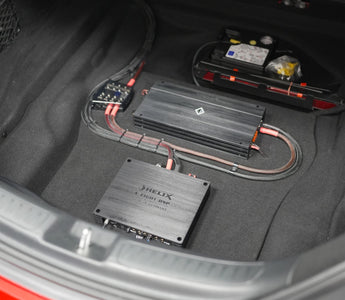
At the top of the tree sits the new Helix Next DSP Ultra XT (£1,799) — a 16-channel standalone processor with 12-channel high-level input for full active, multi-amplifier builds. For most systems a more modest DSP or DSP amplifier does the job; tell us your setup and budget and we'll recommend the right level of processing.
Frequently asked questions
Is a DSP worth it with factory speakers?
It can make a surprising difference — correcting the factory EQ curve and time alignment sharpens what you already have. But pairing a DSP with upgraded speakers and amplification is where it truly earns its cost.
What's the difference between a DSP and a DSP amplifier?
A standalone DSP processes signal only and feeds separate amplifiers; a DSP amplifier combines processing and amplification in one box. Standalone units suit high-end multi-amp systems, DSP amps suit compact installs.
Can CEN tune a DSP for me?
Yes — a DSP is only as good as its tune. We set up crossover points, time alignment and EQ from our Nottingham premises so the system is measured and dialled in, not guessed.
Written by the CEN team in Nottingham — specialists in amplified and processed audio systems. Questions? Contact us or call 0115 924 0666.

