

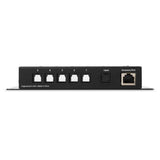

JL Audio VXi-HUB JLid Comm & Optical Audio Network Hub for VXi Amps Amplifiers
Couldn't Load Pickup availability
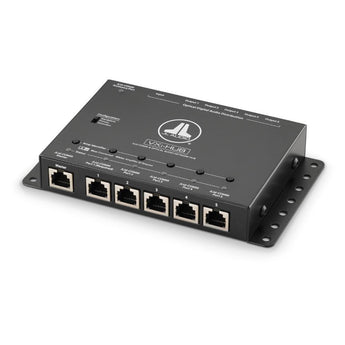
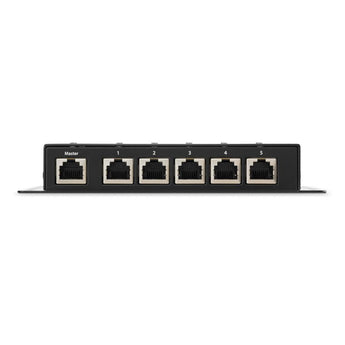
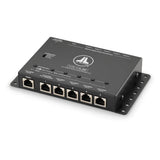
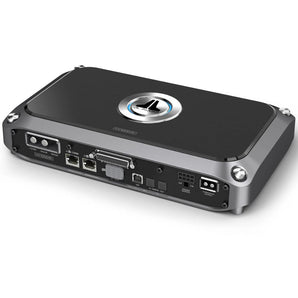
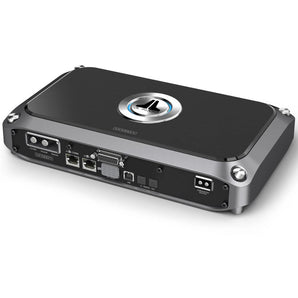
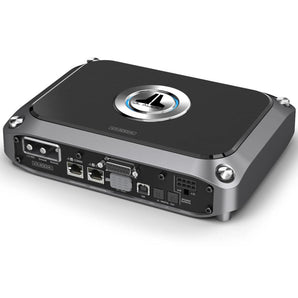
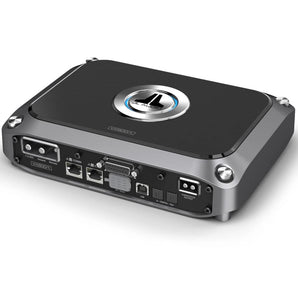
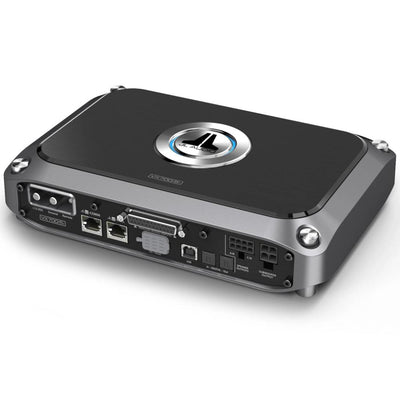
The JL Audio VXi-HUB is a JLid communication and optical audio network hub for VXi series amplifiers. It links up to six VXi amplifiers to a single DRC controller and a single TüN software session, and distributes synchronous S/PDIF optical audio (up to 24 bit/192 kHz) to up to five amplifiers simultaneously.
For use with JL Audio VXi amplifiers such as the VX600/6i, VX800/8i and VX1000/1i. Powered through the JLid connection — no separate power or turn-on wiring needed.
Key specifications
- JLid-COMM connections: 1 master input, 5 slave outputs, 1 accessory port
- Network size: up to 6 VXi amplifiers; up to 10 with two hubs daisy-chained
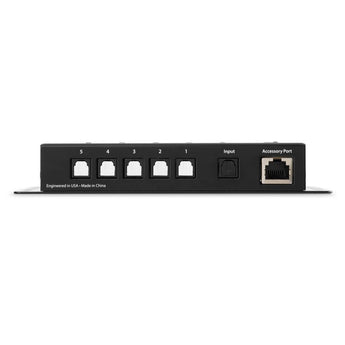
- Optical audio (S/PDIF): 1 input, 5 synchronous outputs, up to 24 bit/192 kHz
- Configuration switch: Standalone / Primary / Secondary
- Amp identifier status LEDs
- Power: via JLid connection to VXi amplifiers
- Dimensions (H × W × D): 26 × 165 × 98 mm
Data networking
The VXi-HUB's primary function is data networking. It allows a network of VXi amplifiers to respond to synchronised commands from a single DRC controller — DRC-100, DRC-200 or DRC-205 (all sold separately). Commands include Master Volume, Subwoofer Level, Fader, Zone Level and Preset Selection.
It also lets all networked VXi amplifiers be tuned within a single TüN software session, so you can switch between amplifiers during tuning without swapping cables.
The hub provides one Master and five Slave JLid-COMM connections via standard CAT5e cables, supporting one master and up to five slave amplifiers. Two VXi-HUBs can be daisy-chained to expand the network to ten amplifiers (one master, nine slaves).
A dedicated JLid-COMM accessory port supports the optional VXi-BTC Bluetooth Communicator (sold separately), enabling wireless setup and tuning of the entire amplifier network via a compatible iOS or Android device running TüN Mobile or TüN Express.
Optical audio distribution
The VXi-HUB also distributes synchronous optical digital audio to networked amplifiers, avoiding the signal delays caused by passing digital audio through a chain of amplifiers. The source unit's optical output connects directly to the VXi-HUB's Optical Audio Input, which then feeds five synchronous Optical Outputs simultaneously. S/PDIF signals up to 24 bit/192 kHz are supported.
Explore the full range in JL Audio VXi Amplifiers.
Specification
| JLid-COMM Connections | 1 Master Input / 5 Slave Outputs / 1 Accessory Port |
|---|---|
| Optical Audio (S/PDIF) Connections | 1 Input / 5 Synchronous Outputs |
| 3-Way Configuration Switch | Standalone / Primary / Secondary |
More specs
| |
What's Included
- VXi-HUB
JL Audio
About the JL Audio VXi-HUB
From our tech experts at CEN
The JL Audio VXi-HUB networks up to six VXi amplifiers so they respond to a single DRC controller and a single TuN software session. It also distributes optical S/PDIF audio up to 24 bit/192 kHz to five amplifiers at once, takes power through the JLid connection and measures 26 x 165 x 98 mm.
Who it suits
Larger VXi systems, such as a VX800/8i for the front stage with a VX1000/1i on subwoofers, where volume, subwoofer level, fader, zone level and presets must change together. Two hubs can be daisy-chained for up to ten amplifiers.
Our tech experts advise
The DRC-100, DRC-200 or DRC-205 controller is sold separately, so plan which one you want. Set the configuration switch to Standalone, Primary or Secondary to match the network, and use the status LEDs to confirm each amplifier is seen. Installation and tuning are priced per vehicle, so get in touch.
Explore the full JL Audio range at CEN, with fast UK dispatch and expert advice from our Nottingham team. Shop all JL Audio
Recommended For You
Discover more top-rated gear, handpicked to go with what you're viewing







More from JL Audio VXi Amplifiers
More options from the same range, in stock and ready to go
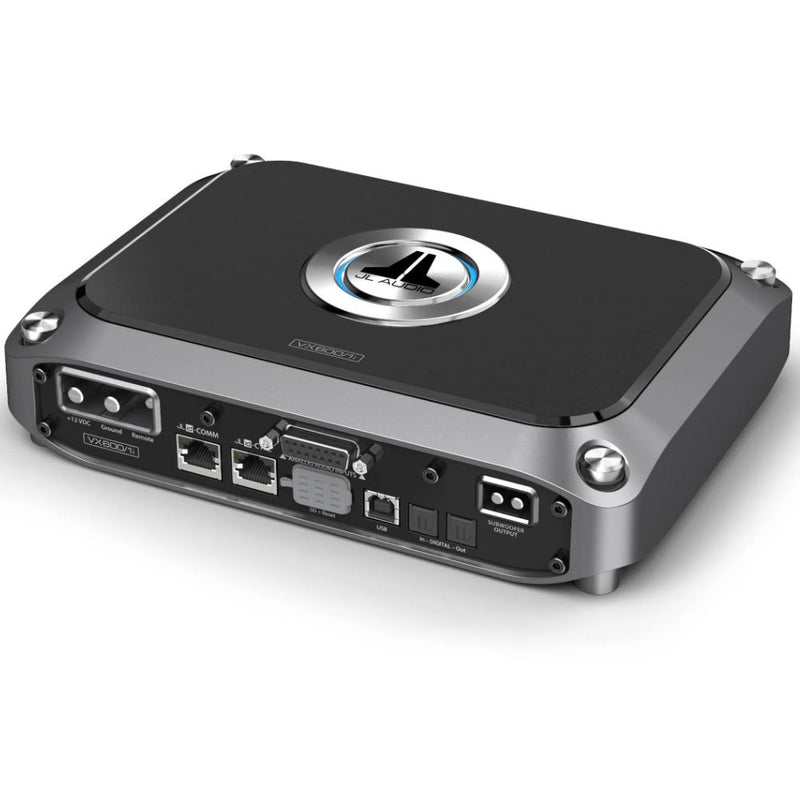
JL Audio VX600/1i VXI Series Monoblock Subwoofer Amplifier DSP Amp 600w RMS
£929.00
View product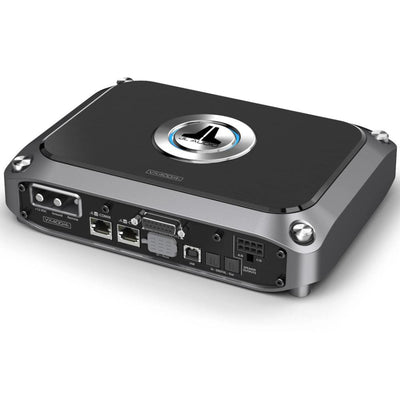
JL Audio VX400/4i VXi Series 4 Channel Full Range Amplifier DSP Amp 400w RMS
£1,019.00
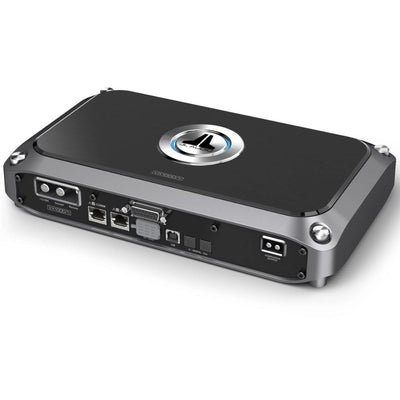
JL Audio VX1000/1i VXI Series Monoblock Subwoofer Amplifier DSP Amp 1000w RMS
£1,189.00
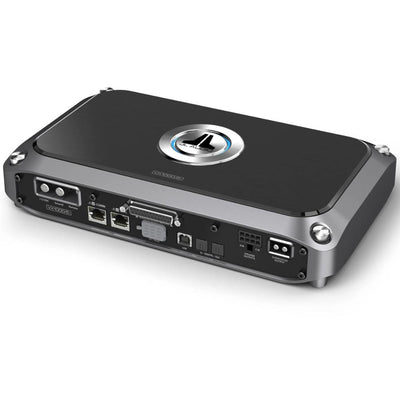
JL Audio VX1000/5i VXi Series 5 Channel Full Range Amplifier DSP Amp 1000w RMS
£1,359.00
JL Audio VX700/5i VXi Series 5 Channel Full Range Amplifier DSP Amp 700w RMS
£1,189.00
Frequently Asked Questions
Q: How many VXi amplifiers can the VXi-HUB connect?
A: One hub networks up to six VXi amplifiers (one master and five slaves) using standard CAT5e cables. Two hubs can be daisy-chained for up to ten amplifiers.
Q: Does the VXi-HUB need its own power supply?
A: No. It is powered through the JLid connection to the VXi amplifiers and needs no separate power or turn-on wiring.
Q: What does the VXi-HUB do with optical audio?
A: It takes the optical digital output of a source unit and distributes synchronous digital audio to the networked amplifiers from its five optical outputs, handling S/PDIF signals up to 24 bit/192 kHz.
Q: Which controllers work with the VXi-HUB?
A: A single DRC-100, DRC-200 or DRC-205 controller (sold separately) can send master volume, subwoofer level, fader, zone level and preset commands to the whole network. The accessory port also accepts the optional VXi-BTC Bluetooth Communicator.
Not Sure Where to Start?
Straightforward advice and the latest news from our Nottingham team.
All Guides and News →
Amplifiers
What Is a DSP? In-Car Sound Processing Explained
Read the guide →
Car Audio
Underseat vs Boxed Subwoofers: Which Is Right for Your Car?
Read the guide →
Car Audio
Helix Compose i5 Expands: FlexMount Speakers for Cars That Fight Back
Read more →
Car Audio
Pioneer Perfect Fit 9-Inch Stereos: Fitting Kits and Every Car They Fit (2026)
Read the guide →
Car Audio
BMW Speaker Upgrades Explained: Where to Start and What Fits
Read the guide →
Car Audio
Christmas Gift Guide 2026: Car Audio, Dash Cams and Outdoor Tech
Read the guide →