









In this guide
The short version: for most cars, a 10" or 12" subwoofer in a sealed enclosure, driven by a properly matched amplifier, transforms your system more than any other single upgrade. If you want the simplest route, buy an active enclosure — sub, box and amplifier in one unit, two cables to connect. If you want maximum performance per pound and don't mind more installation, go passive component and build the system around it.
The three routes, honestly compared
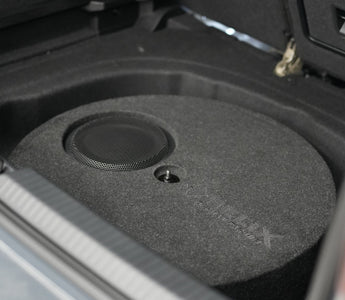
1. Active (powered) enclosures — like the Hertz Dieci DBA series or the Audison Voce AVBX series — combine driver, enclosure and amplifier in one engineered unit. Fitting is power, earth, remote and signal, and the amp is factory-matched to the driver. This is the route we recommend for most people: no matching maths, no separate amp to house, and the engineered enclosures often outperform an equivalent budget spent on separates. The compromise is ultimate output — a big passive setup will go louder.
2. Passive subwoofer + enclosure + amplifier — the traditional route, and the one with headroom. You choose each part, which means you control the character: see JL Audio, Rockford Fosgate, Kicker, Hertz, Focal and Ground Zero.
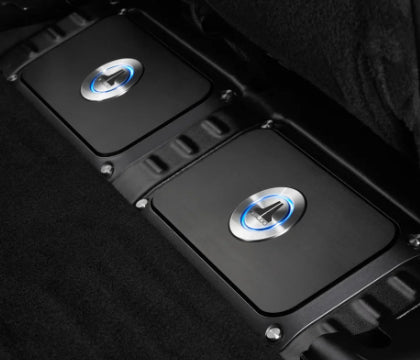
3. Underseat compacts — shallow powered subs that hide under a seat. They add genuine warmth and low-end that factory systems lack, without sacrificing boot space. Just be realistic: they supplement, they don't slam.
The numbers that matter (and the ones that don't)
RMS is the only power figure to compare. It's continuous handling — what the sub can do all day. Peak and "max" figures describe momentary bursts and are mostly marketing. Match your amplifier's RMS output (at the sub's impedance) to the sub's RMS rating; a slightly overpowered clean amp is safer than an underpowered one driven into distortion.
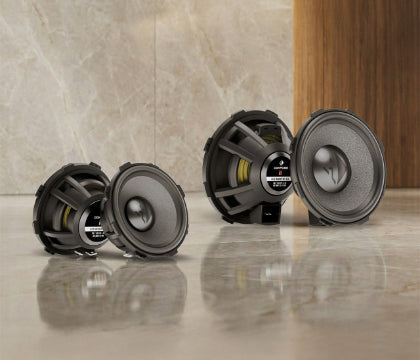
Size sets character more than volume. An 8" sub is fast and musical; a 12" digs deeper with more authority; a 10" is the versatile middle. Bigger isn't better — it's different, and it needs a bigger box.
Sealed vs ported
A sealed box is compact, forgiving, and produces tight, accurate bass that suits every genre — our default recommendation for sound-quality builds. A ported box is larger and tuned to reinforce low frequencies, producing more output for the same power — the choice when impact matters most. Build either to the manufacturer's recommended volume (listed in the Specification tab where provided) and you'll get what the designer intended.
Not sure? Tell us the car, the music and the budget and we'll spec the whole system — CEN supplies enclosures and offers professional installation, including amplifier wiring, from our Nottingham premises.
Frequently asked questions
Do I need an amplifier for a subwoofer?
For any passive subwoofer, yes. Active enclosures have one built in. Factory head units don't produce subwoofer power.
Will a subwoofer work with my factory stereo?
Yes — a line output converter takes the factory speaker signal and produces the clean low-level feed an amplifier needs. We stock converters and can advise the right one.
What wiring do I need for a subwoofer?
An amplifier wiring kit sized to the amp's power draw — power and earth cable, fuse, RCAs and remote wire.
How much does professional subwoofer installation cost?
It depends on the system and vehicle — contact CEN with what you have in mind and we'll quote a fitted price.
Written by the CEN team in Nottingham. Browse all subwoofers — or come and hear the difference an engineered enclosure makes.

