



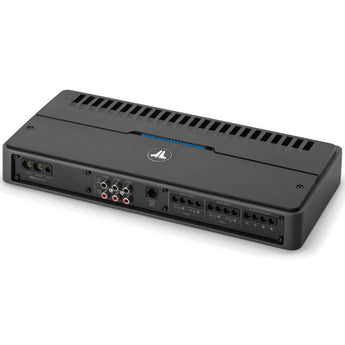
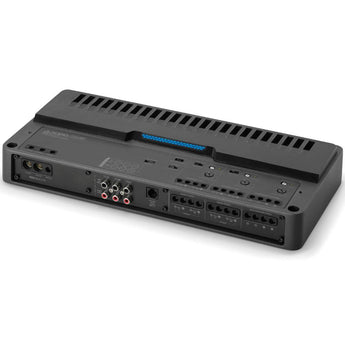
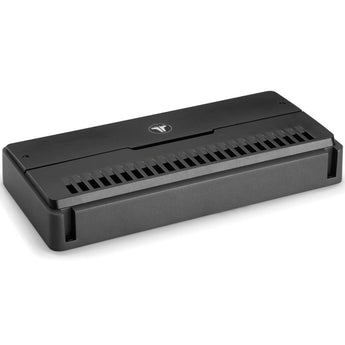
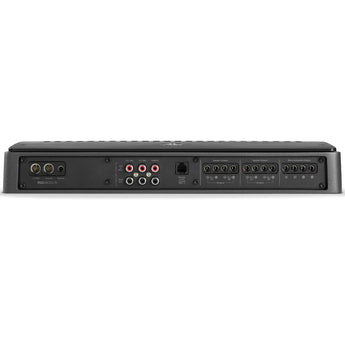
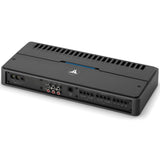
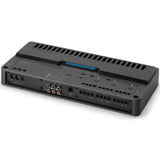
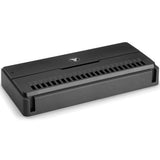
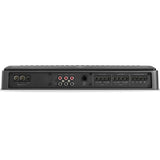
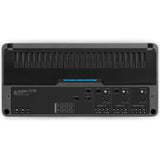
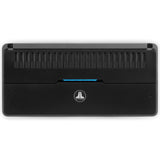
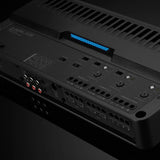

JL Audio RD900/5 RD Series Class D 5 Channel Stereo Subwoofer Amplifier 900w RMS
Couldn't Load Pickup availability
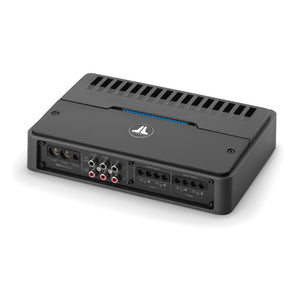
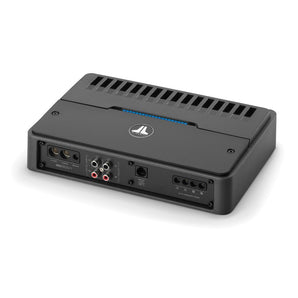
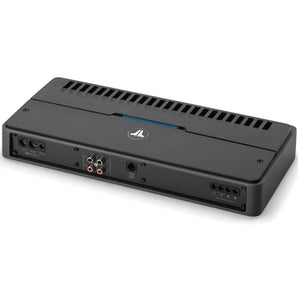
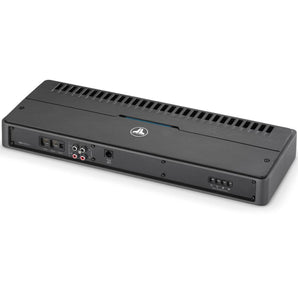
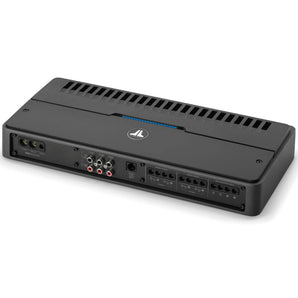
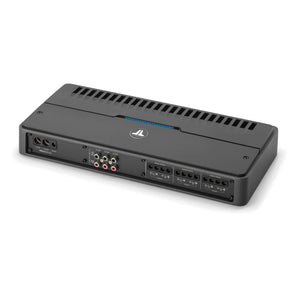
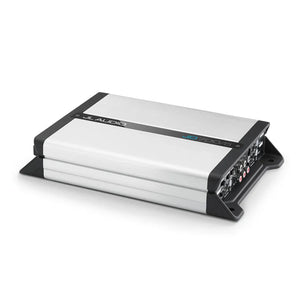
The JL Audio RD900/5 is a 5-channel Class D system amplifier rated at 900 W RMS, from JL Audio's RD Series. It delivers 70 W RMS x 4 at 4 Ω plus 500 W RMS x 1 at 2 Ω (at 14.4 V), powering four speakers and a subwoofer from a single compact chassis.
The RD Series is also available as the JL Audio RD500/1 monoblock subwoofer amplifier.
Key specifications
- Channels: 5 (4 main + 1 subwoofer), Class D
- Main channels (14.4 V): 70 W RMS x 4 @ 4 Ω, 100 W RMS x 4 @ 2 Ω
- Main channels bridged (14.4 V): 200 W RMS x 2 @ 4 Ω
- Subwoofer channel (14.4 V): 500 W RMS x 1 @ 2 Ω, 225 W RMS x 1 @ 4 Ω
- Crossovers: 12 dB/octave high-pass (main) and low-pass (sub), 50 Hz – 500 Hz continuously variable
- Inputs: differential-balanced, switchable 200 mV – 2 V or 800 mV – 8 V RMS
- Automatic turn-on: signal sensing or DC-offset sensing
- Fuse rating: 80 A; minimum power/ground wire 4 AWG
- Dimensions (H x W x D): 54 x 372 x 177 mm; weight 2.79 kg
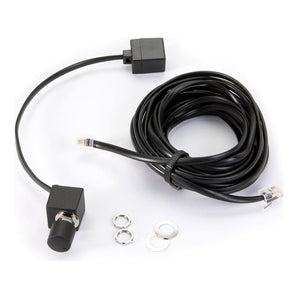
- Remote level control: optional RBC-1 (sub channel, sold separately)
5-channel Class D system amplifier
The RD900/5 is designed as an all-in-one solution to power a complete system — four satellite speakers plus a subwoofer — from a single chassis. Using JL Audio's NexD™ switching technology, it produces 70 W x 4 into 4 Ω for the main channels and 500 W x 1 into 2 Ω for the subwoofer. Each pair of main channels is fully bridgeable, delivering 200 W x 2 into 4 Ω to run the amp as a powerful 3-channel unit.
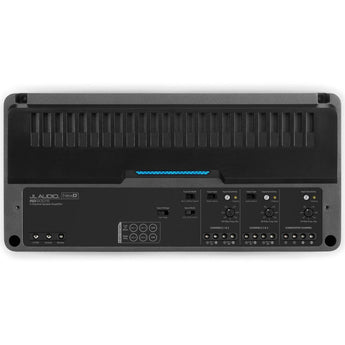
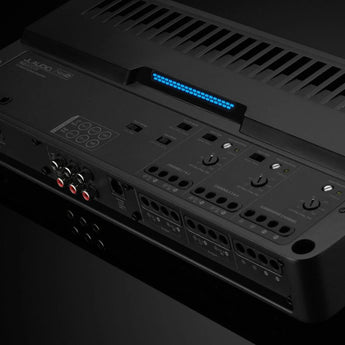
Signal processing controls are located on top of the amplifier beneath a removable protective cover. Each pair of main channels has a 12 dB/octave high-pass filter; the subwoofer channel has a dedicated low-pass filter. All three crossovers offer continuously variable frequency selection from 50–500 Hz. Dual-range, differential-balanced inputs accept a wide range of input voltage levels, with automatic turn-on via signal sensing or DC-offset sensing.
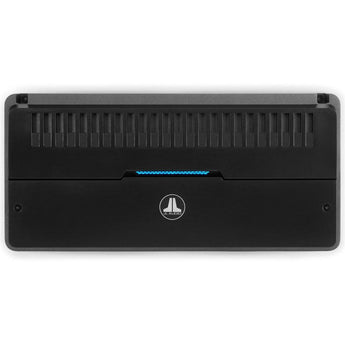
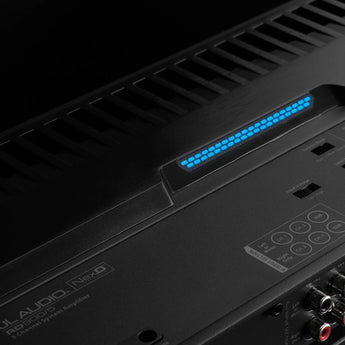
LED clipping indicators are fitted to each channel section, making it straightforward to set input sensitivity accurately without special equipment. The RD900/5 has a black powder-coated finish and a top-mounted dual-colour LED strip showing overall amplifier status. An optional RBC-1 remote level control (sold separately) allows subwoofer output to be adjusted from the driver's seat.
NexD™ switching technology
NexD™ is JL Audio's proprietary Class D switching technology, developed from the company's experience with the original 'Slash' subwoofer amplifiers. It delivers high fidelity, high efficiency and high power from compact amplifier designs.
A traditional fixed-frequency PWM switching amplifier varies pulse width based on the audio input signal alone, which assumes ideal conditions — such as a stable power supply — that rarely exist in a real car installation. Power supply sag under load causes distortion at all power levels, even well below clipping. Feedback can correct this at lower frequencies, making it workable for subwoofer amplifiers, but it becomes impractical at higher audio frequencies, ruling it out for full-range designs.
For the subwoofer channel, NexD™ uses an enhanced fixed PWM approach running at 240 kHz — approximately four times higher than most Class D subwoofer amplifiers. This extends bandwidth to at least 500 Hz with low distortion, improves efficiency, and keeps the circuitry compact.
For the full-range main channels, NexD™ uses a variable, ultra-high-speed self-oscillating modulator running at well over 400 kHz. A feed-forward circuit sends information about the instantaneous power supply voltage directly to the modulator, combining it with the input signal to cancel distortion caused by supply voltage fluctuation before feedback is applied. This simplifies the overall feedback loop and reduces distortion throughout the audio band.
Explore the full range in JL Audio RD Amplifiers.
Specification
| Frequency Response | (Main Channels) 12 Hz - 22 kHz (+0, -1dB) |
|---|---|
| Frequency Response | (Subwoofer Channel) 10 Hz - 500 Hz (+0, -1dB) |
| Filter Mode(s) | Channels 1 & 2 (front) High-Pass only |
| Filter Slope(s) | Channels 1 & 2 (front) 12 dB/octave |
| Filter Frequency Range | Channels 1 & 2 (front) 50 Hz - 500 Hz |
| Filter Mode(s) | Channels 3 & 4 (rear) High-Pass only |
| Filter Slope(s) | Channels 3 & 4 (rear) 12 dB/octave |
| Filter Frequency Range | Channels 3 & 4 50 Hz - 500 Hz |
| Filter Mode(s) | Subwoofer Channel Low-Pass only |
| Filter Slope(s) | Subwoofer Channel 12 dB/octave |
| Filter Frequency Range | Subwoofer Channel 50 Hz - 500 Hz |
| Infrasonic Filter | Subwoofer Channel No |
More specs
| |
What's Included
- 5-Channel amplifier
- 2.5mm Allen wrench
- Self-adhesive JL Audio badge
- Owner's manual
JL Audio
About the JL Audio RD900/5
From our tech experts at CEN
A 5-channel amplifier from JL Audio’s RD Series, rated at 900w RMS.
Who it suits
Drivers whose speakers have outgrown the head unit, or who are building a front stage where each channel has a defined job. RD Series is the workhorse: efficient Class D with enough power for most builds.
Our tech experts advise
Matching the amplifier to the speakers matters more than headline watts, and the gains want setting with a meter rather than by ear. It also needs a fused feed from the battery on the correct cable gauge. Installation is priced per vehicle, so get in touch with your make, model and year and we will confirm what it needs. See car audio installation.
Explore the full JL Audio range at CEN, with fast UK dispatch and expert advice from our Nottingham team. Shop all JL Audio
Recommended For You
Discover more top-rated gear, handpicked to go with what you're viewing










Looking for Installation?
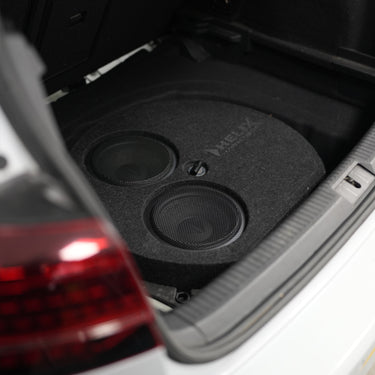
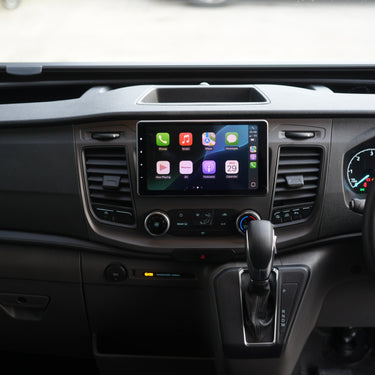
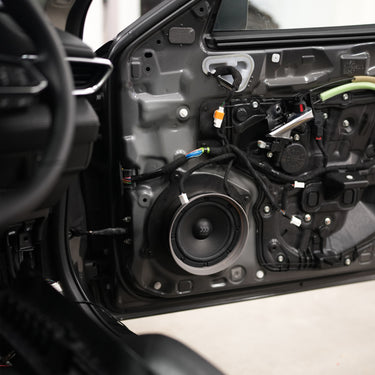
At CEN we take pride in being able to share the quality of our work as well as being able to show what incredible products we have installed week on week.
More from JL Audio RD Amplifiers
More options from the same range, in stock and ready to go


 JL Audio RD400/4 Full Range Class D 4 Channel Car Speaker Amp Amplifier 400w RMS £309.00 /Low stock


Frequently Asked Questions
Q: How do I choose the right amplifier for my speakers or subwoofer?
A: Match the amplifier's RMS output per channel to the RMS handling of your speakers or subwoofer at the same impedance. The Specification tab lists the power figures. If in doubt, contact CEN with your setup and we will recommend a match.
Q: What wiring do I need to install this amplifier?
A: You will need an amplifier wiring kit sized to the amplifier's power draw, typically including power and earth cable, a fuse, RCA leads and a remote wire. CEN stocks complete wiring kits, and the amplifier's fuse rating is the guide to the cable gauge required.
Q: What class of amplifier is this and does it matter?
A: Class D amplifiers are compact and efficient, ideal for subwoofers and modern installs. Class AB designs are traditionally favoured for outright sound quality on mid and high frequencies. The class is listed in the Specification tab where provided.
Q: Will an amplifier work with my factory head unit?
A: Yes, in most cases. If your head unit has no RCA outputs you will need a line output converter to feed the amplifier a clean signal. CEN stocks line output converters and can advise the right one for your vehicle.
Q: Can CEN install this amplifier?
A: Yes. CEN offers professional amplifier installation from our Nottingham premises, including secure mounting, wiring and setup. Contact us to book.
Q: How much power does the JL Audio RD900/5 deliver?
A: At 14.4 V the RD900/5 delivers 70 W RMS x 4 into 4 ohms (100 W RMS x 4 into 2 ohms) on the main channels plus 500 W RMS x 1 into 2 ohms on the subwoofer channel. At 12.5 V the figures are 60 W x 4 into 4 ohms and 350 W x 1 into 2 ohms.
Q: Can the RD900/5 be bridged?
A: Yes. Each pair of main channels can be bridged to 200 W RMS x 2 into 4 ohms (at 14.4 V), turning it into a 3-channel amplifier alongside the subwoofer channel.
Q: Is there a remote bass control for the RD900/5?
A: Yes. The optional JL Audio RBC-1 remote level control (sold separately) lets you adjust the subwoofer channel level from the driver's seat.
Q: What's in the box with the RD900/5?
A: The 5-channel amplifier, a 2.5 mm Allen wrench, a self-adhesive JL Audio badge and the owner's manual.
