

In this guide
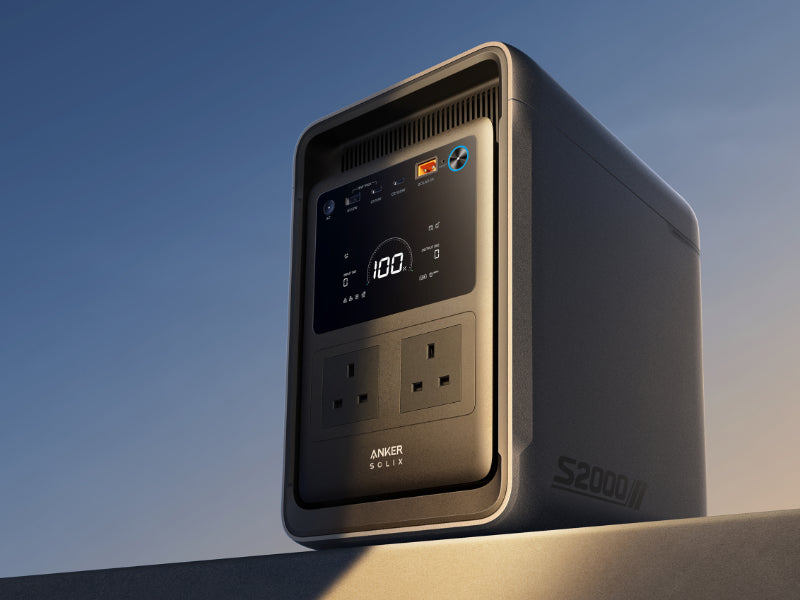
Winter storms and power cuts have a way of revealing exactly how much of your home depends on electricity. A portable power station is the straightforward answer — silent, fume-free, usable indoors, and ready the moment the lights go out.
What you actually need to keep running
Start with essentials rather than everything. A fridge or freezer, lighting, phone and laptop charging, the router, and a medical device if anyone relies on one. That list usually comes to far less than people expect — and it's a very different number from "run the whole house".
Sizing it
A fridge is typically 300–600Wh a day. Lights and device charging add relatively little. So a 1000Wh station covers the essentials for a day or two, while a 2000Wh or 3000Wh unit takes you through a longer outage comfortably. Our off-grid power guide walks through the arithmetic.
The catch: output, not capacity
The mistake people make is buying on watt-hours alone. Kettles, fan heaters and anything with a motor demand a big surge the instant they start. Check the station's continuous and peak output against your most demanding appliance — a huge battery that trips out on a kettle isn't much use.
Keep it charged and keep it indoors
A power station only helps if it's full when you need it. Modern LiFePO4 units hold their charge for months with very low idle drain, so topping up every few weeks is enough. Store it somewhere warm — batteries deliver less in the cold — and if you have solar panels, they'll top it back up between outages.
The dual-purpose argument
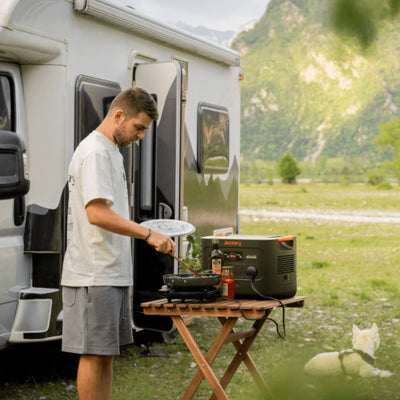
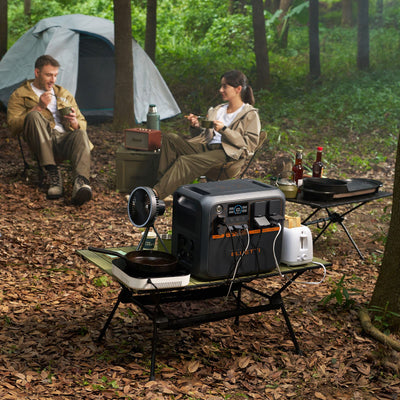
The reason we recommend these over dedicated home backup kit is simple: the same box goes camping, powers a market stall, runs tools on a site without power, and charges camera batteries on location. Emergency gear that sits unused for three years is expensive; this earns its keep in between.
Frequently asked questions
How long will a power station run my fridge?
A typical fridge draws 300–600Wh a day, so a 1000Wh station covers roughly two days, a 2000Wh station around four. Check your appliance's rating rather than guessing.
Can I run a kettle or heater?
Check the surge and continuous output, not just capacity — kettles, heaters and power tools demand far more at once than their running figure suggests.
Is it better than a generator?
For home use, yes — no fumes, no noise, and it works indoors. A petrol generator still wins for multi-day outages where you can refuel.
Written by the CEN team in Nottingham — outdoor and off-grid power specialists. Questions? Contact us or call 0115 924 0666.