




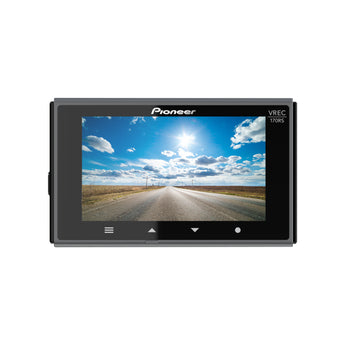
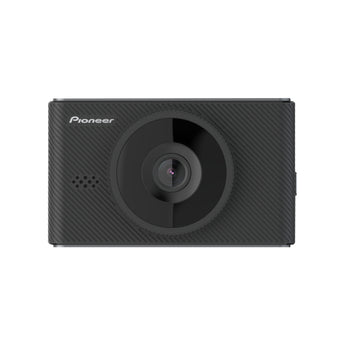
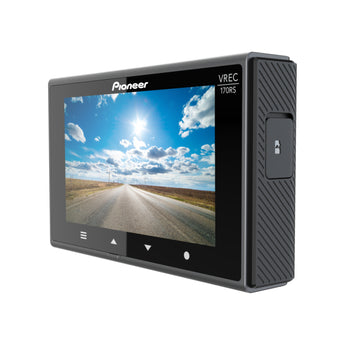
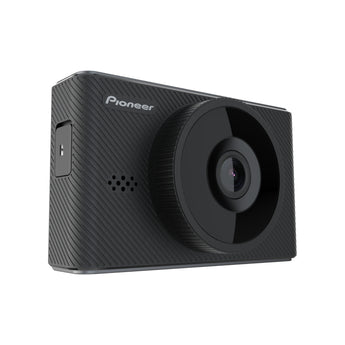
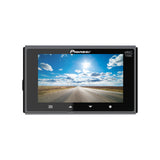
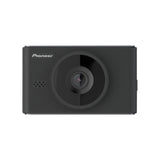
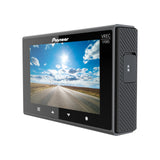
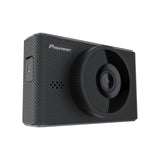

Pioneer VREC-170RS Dash Cam 1 Channel Front Camera Full HD 30 FPS WDR WiFi GPS
Couldn't Load Pickup availability
VREC-170RS
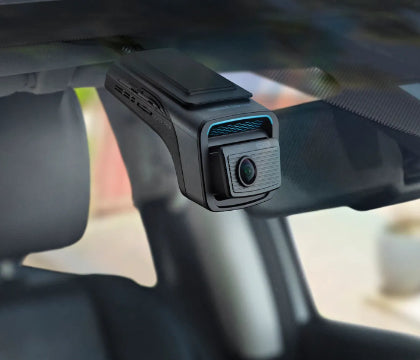
1-Channel (Front) Dash Camera, Full HD, 30 fps. 139° Wide Viewing Angle. Also features GPS, Wireless Connection and Security Mode.
The Pioneer VREC-170RS is a straightforward front dash cam with Full HD recording, built-in GPS and Wi-Fi, all in a compact unit.
- 1-Channel Dash Camera — Records the road ahead from a single front-facing camera.
- Advanced Driver Assistance Systems (ADAS) — Continuously monitors road conditions ahead. Gives an audible safety warning if a pre-defined hazard is detected.
- GPS — Records your position, vehicle speed, direction of travel and time alongside your footage.
- Wi-Fi — Connects wirelessly to your smartphone without needing a cable between your phone and the unit.
- Wide Dynamic Range (WDR) — Balances bright and dark areas in the image. Reduces overexposure and underexposure in tricky lighting conditions, such as night driving or passing through tunnels.
- Wide Viewing Angle — The 139° lens captures more of the road around you, reducing blind spots for hazards such as cyclists, pedestrians or motorcycles approaching from the side.
Explore the full range in 1080p Dash Cams.
Specification
| Camera Type | 1-Camera Type |
|---|---|
| Sensor | Technology CMOS |
| Dimensions | Front Camera: 89.5 mm x 54.3 mm x 29.9 mm |
| Front Camera | Horizontal 100°, Vertical 52°, Diagonal 139° |
| Recording resolution | Full HD |
| Event recording | 33 sec |
| Manual Recording Times | 33 sec |
| Frame Rate (fps) | Front Camera: 30 fps |
| Sound Recording | On / Off |
| Power Consumption | Approximately 2.3 W / 12 V |
| Power Cable Length | 3.5 m |
| Power Connection Type | Cigar charger power cable |
| MicroSD Card Memory Size | 16 GB to 32 GB |
| MicroSD Card Compatibility | microSDHC memory card class 10 |
More specs
| |
What's Included
- Front Camera
- Mounting Cradle
- Cigar Charger Power Cable
- Quick Start Guide
- Warranty Document
Pioneer
About the Pioneer VREC-170RS
From our tech experts at CEN
A dash cam, recording in 1080p.
Who it suits
Drivers who want evidence if something happens, which in practice means anyone who drives for work, carries passengers or parks on the street.
Our tech experts advise
Hardwire it if you want parking mode, because the 12V socket dies with the ignition, and use a high-endurance memory card since ordinary cards fail under constant rewriting. We fit dash cams from £60 at our Beeston workshop. See dash cam installation.
Explore the full Pioneer range at CEN, with fast UK dispatch and expert advice from our Nottingham team. Shop all Pioneer
Recommended For You
Discover more top-rated gear, handpicked to go with what you're viewing


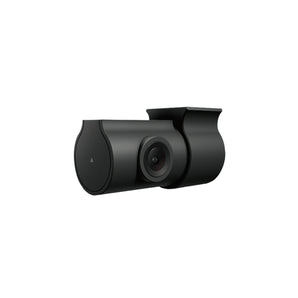


Looking for Installation?
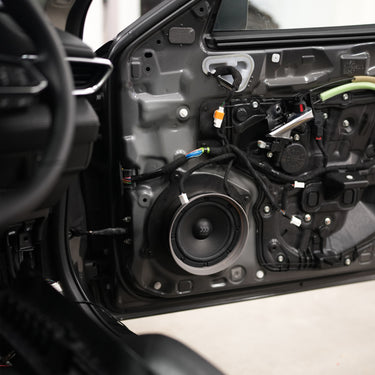
At CEN we take pride in being able to share the quality of our work as well as being able to show what incredible products we have installed week on week.
More from 1080p Dash Cams
More options from the same range, in stock and ready to go

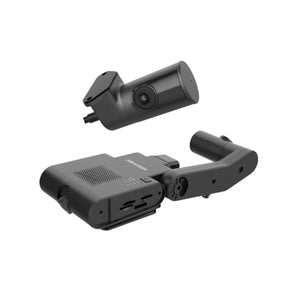

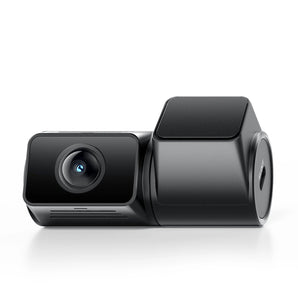 Save 21% Highly Rated Viofo RC320 Rear Dash Camera 1080p HD for A229 Pro & Plus RRP
£69.95£54.95 / Save 21%Low stock
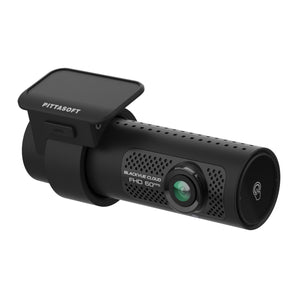 BlackVue Dash Cam DR770X-1CH II Full HD Starvis Sensor WiFi GPS 1 Channel Camera £299.95 /Low stock
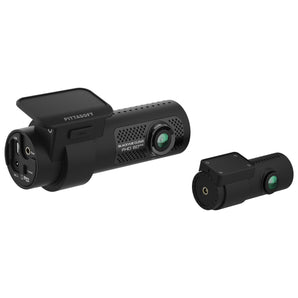 Save 5% BlackVue Dash Cam DR770X-2CH II Full HD Starvis Sensor WiFi GPS 2 Channel Camera RRP
£399.95£379.95 / Save 5%Low stock
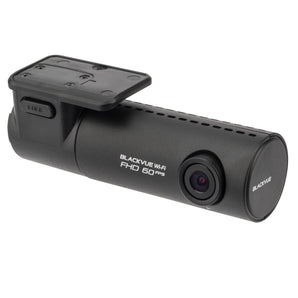 Highly Rated BlackVue Dash Cam DR590X-1CH 32GB Full HD 1080p Starvis Wi-Fi 1 Channel Camera £199.95 /Low stock
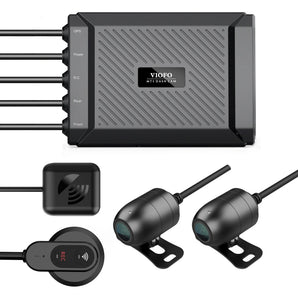 Save 12% Popular Viofo MT1 Motorcycle Dash Cam 1080p HD WiFi GPS Dual Channel Motorbike Camera RRP
£249.95£219.95 / Save 12%In stock


Frequently Asked Questions
Q: What SD card do I need for this dash cam?
A: Use a high-endurance microSD card designed for continuous recording. Standard cards wear out quickly in dash cams. CEN stocks suitable high-endurance cards, and the maximum supported capacity is listed in the Specification tab.
Q: Does this dash cam record while the car is parked?
A: Parking mode is listed in the Specification tab. Where supported, it requires constant power from either a hardwire kit or a dedicated dash cam battery pack, both of which CEN stocks.
Q: Do I need to hardwire the dash cam?
A: Not necessarily. All dash cams work from the 12V socket for drive recording. Hardwiring hides the cabling and enables parking mode, and CEN offers professional hardwire installation from our Nottingham premises.
Q: Will the footage be accepted by my insurer or the police?
A: Dash cam footage is widely used in insurance claims and can be submitted to most UK police forces through their online portals. Recording quality matters, so check the resolution in the Specification tab.
Q: Front only or front and rear - which should I choose?
A: A front camera covers the most common claim scenarios. A two-channel system adds rear coverage for rear-end collisions and tailgating evidence, which is where many disputed claims arise. Three-channel systems add an interior view, suited to taxi and fleet use.
